India-US Trade Deal 2026: 18% Tariff Pivot & Impact on MSME Exporters
The announcement on February 2, 2026, of a comprehensive trade reset between India and the United States is more than just a diplomatic win; it is a fundamental shift in the cost of doing business globally. As a Chartered Accountant firm advising high-stakes exporters and tech firms in Noida and Delhi-NCR, we view this as a critical window for fiscal restructuring.
The 18% Tariff Floor: Restoring India’s Competitive Edge
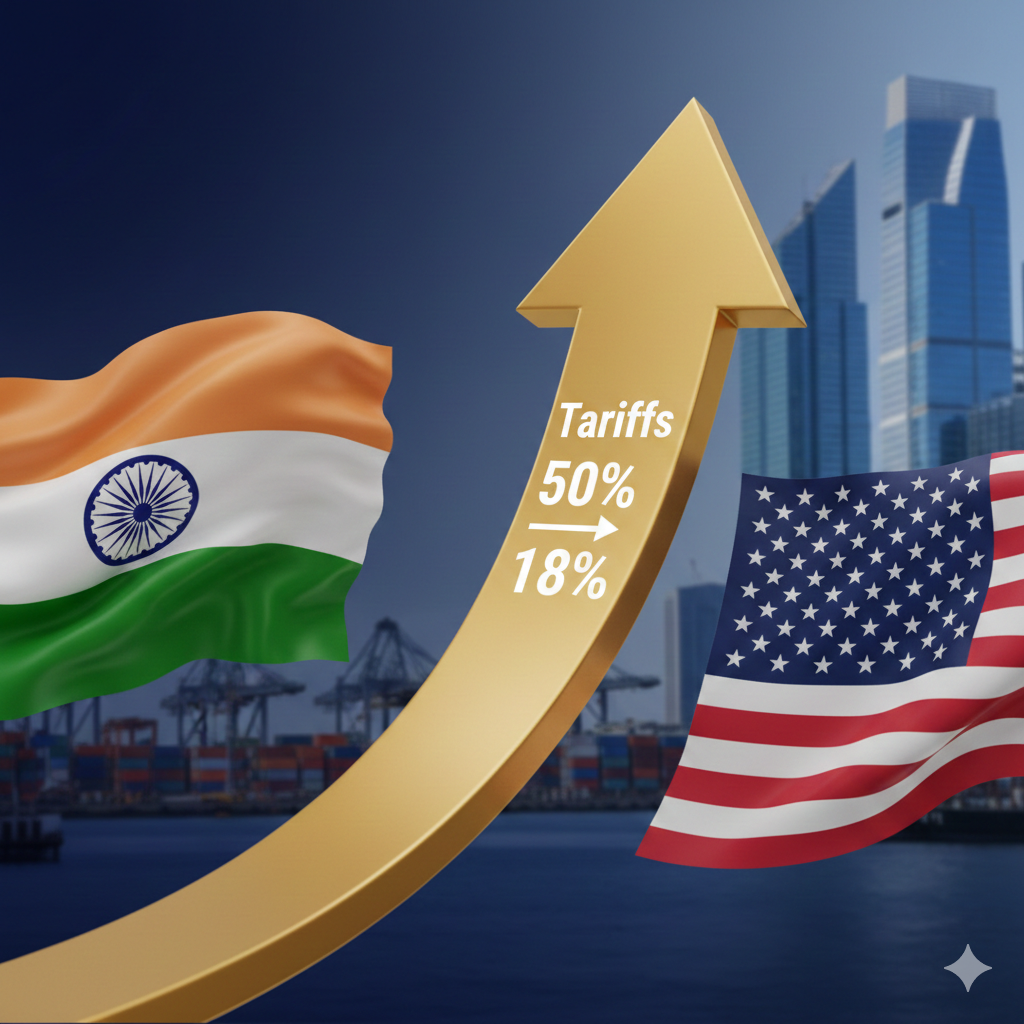
For nearly a year, Indian goods faced effective tariffs nearing 50% due to punitive surcharges. The new agreement slashes this to a standardized 18% reciprocal tariff.
This is a game-changer for MSMEs. By undercutting the tariff rates of competitors like Vietnam and Bangladesh (both at 20%), India has positioned itself as the preferred “plus-one” partner for U.S. procurement.
Sectoral Deep-Dive: Who Wins?
- Manufacturing & Auto Components: The removal of the 25% “Russian oil” surcharge allows Indian engineering goods to enter the U.S. market at record-low landed costs.
- The Noida Tech Corridor: In tandem with the Union Budget 2026-27, the deal offers specific tax holidays for U.S. firms establishing Global Capability Centers (GCCs) and Data Centers. This will likely trigger a surge in FDI and professional service demands in the NCR region.
- Apparel & Textiles: With the U.S. being our largest market, the 18% rate provides much-needed margin relief for textile clusters in Tirupur, Noida, and Ludhiana.
Compliance Checklist for Business Leaders
- Audit Customs Valuation: Ensure your HTS (Harmonized Tariff Schedule) classifications are updated to the 18% rate to avoid overpayment.
- Review Transfer Pricing: Increased trade volumes with U.S. subsidiaries will require a fresh look at transfer pricing documentation to ensure compliance with both ICAI and U.S. IRS standards.
- Leverage PLI Schemes: Combine the benefits of this trade deal with existing Production Linked Incentives (PLI) to maximize bottom-line growth.
Why This Matters for Your Business
At an 18% rate, India now enjoys a pricing advantage over regional competitors like Vietnam (20%), Bangladesh (20%), and China (34%+). This is a prime window for Indian manufacturers to recapture market share in the U.S. retail and industrial sectors.
The Bottom Line: The “Strategic Reset” is a clear signal to scale. At Kunal Kapoor & Associates, we specialize in navigating these complex international tax waters to ensure your business stays compliant and competitive.