Budget 2026: Major TDS/TCS Overhaul – Impact on Property Buyers, Travelers, and Businesses in Delhi NCR.
The Union Budget 2026 has introduced significant changes to the Tax Deducted at Source (TDS) and Tax Collected at Source (TCS) framework. For businesses and High Net-worth Individuals (HNIs) in Delhi NCR, these changes signal a move towards simplification and rate rationalization.
As a Chartered Accountant practicing in Noida, I have analyzed the fine print. Whether you are buying a property in Gurgaon from an NRI, running a manpower agency in Okhla, or sending your child abroad for education, here is how the 2026 Finance Bill affects your wallet and compliance burden.
1. Real Estate: Massive Relief for Buyers of NRI Property
One of the biggest pain points for property buyers in Delhi NCR has been the complex compliance when purchasing from a Non-Resident Indian (NRI).
The Old Rule: If you bought property from an NRI, you had to obtain a Tax Deduction and Collection Account Number (TAN) and file a complex Form 27Q. This was a compliance nightmare for individuals.
The Budget 2026 Update:
- No TAN Required: You are no longer required to obtain a TAN for these transactions.
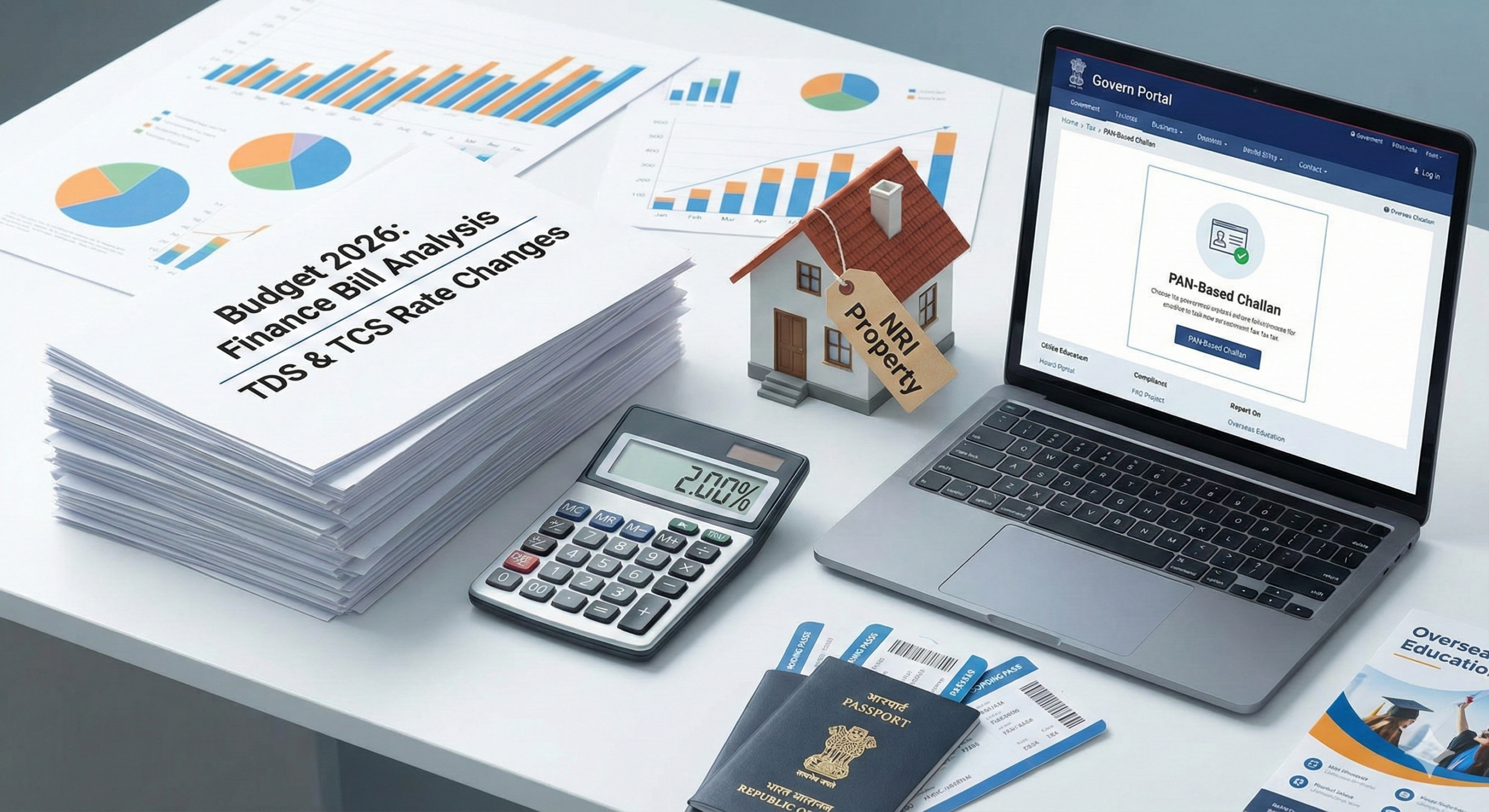
- PAN-Based Challan: You can now deposit TDS using a simple PAN-based challan, similar to the Form 26QB process used for resident sellers.
Impact: This dramatically reduces the compliance cost and time for homebuyers in sectors like Noida and Gurugram, where NRI sellers are common.
2. End of the “194C vs 194J” Dispute: Manpower Supply
For years, businesses have struggled with classifying “Manpower Supply Services.” Should it be 1% (under 194C – Contractors) or 10% (under 194J – Professionals)? This ambiguity often led to litigation.
The Budget 2026 Update:
The government has expressly classified manpower supply as a Works Contract under Section 194C.
| Payee Category | New TDS Rate |
| Individuals / HUF | 1% |
| Others (Pvt Ltd, LLP, etc.) | 2% |
Actionable Insight for CFOs: Update your ERP / Accounting software to deduct TDS at these new specific rates for all staffing and manpower contracts effective April 1, 2026.
3. TCS Rates Slashed: Foreign Travel & Education
In a welcome move for Delhi’s traveling class and students, the aggressive TCS rates introduced in previous years have been rolled back.
Key TCS Changes:
| Transaction Nature | Old Rate | New Budget 2026 Rate |
| Overseas Tour Packages | 5% (up to ₹7L) / 20% (above ₹7L) | Flat 2% (No Limit) |
| Foreign Education/Medical | 5% (above ₹7L) | Reduced to 2% |
This “Flat 2%” regime eliminates the tiered confusion and frees up cash flow for travelers and parents.
4. Standardization of TCS on Goods
While travel got cheaper, certain trade commodities will see a slight increase or standardization to 2%.
- Scrap, Minerals (Coal/Lignite/Iron Ore), Liquor: The TCS rate is now standardized at 2%.
- Note for Manufacturers: If you deal in scrap sales in industrial hubs like Faridabad or Ghaziabad, note that the rate has increased from 1% to 2%.
5. Automated Lower/Nil TDS Certificates (Effective April 1, 2026)
Currently, obtaining a Lower Deduction Certificate (LDC) requires manual application and Assessing Officer (AO) approval—a time-consuming process.
The Change: Budget 2026 introduces a rule-based, automated electronic mechanism. If your income and compliance history meet objective parameters, the system will auto-issue the certificate.
- Benefit: Faster cash flow realization for MSMEs and service providers who struggle with high TDS deductions.
Frequently Asked Questions (FAQs)
Q: When do these changes come into effect?
Most TDS/TCS rate changes are proposed to be effective from the enactment of the Finance Bill (likely April 1, 2026), but the automated LDC system specifically starts April 1, 2026.
Q: I am buying a flat in Noida from an NRI next month. Do I need a TAN?
If the deal closes after the bill is passed, you can likely use the PAN-based system. However, until the specific notification date, the old TAN rules apply. Consult a CA before making the payment.
Q: Does the 2% TCS apply to credit card spends abroad?
The budget specifies “Foreign Remittances” under LRS. Clarification on credit card usage is expected in the detailed circulars.
Conclusion
Budget 2026 clearly aims to reduce the “compliance tax” on honest taxpayers. The removal of TAN requirements for NRI property deals and the reduction of TCS on travel are pro-middle-class moves. However, businesses must be quick to update their accounting systems to reflect the standardized rates.
Need Help Navigating these Changes?
At Kunal Kapoor & Associates, we help Delhi NCR businesses stay ahead of the regulatory curve. Whether you need a compliance audit for your TDS returns or advice on structuring foreign remittances, we are here to help.
Contact Us Today for a Post-Budget Impact Assessment