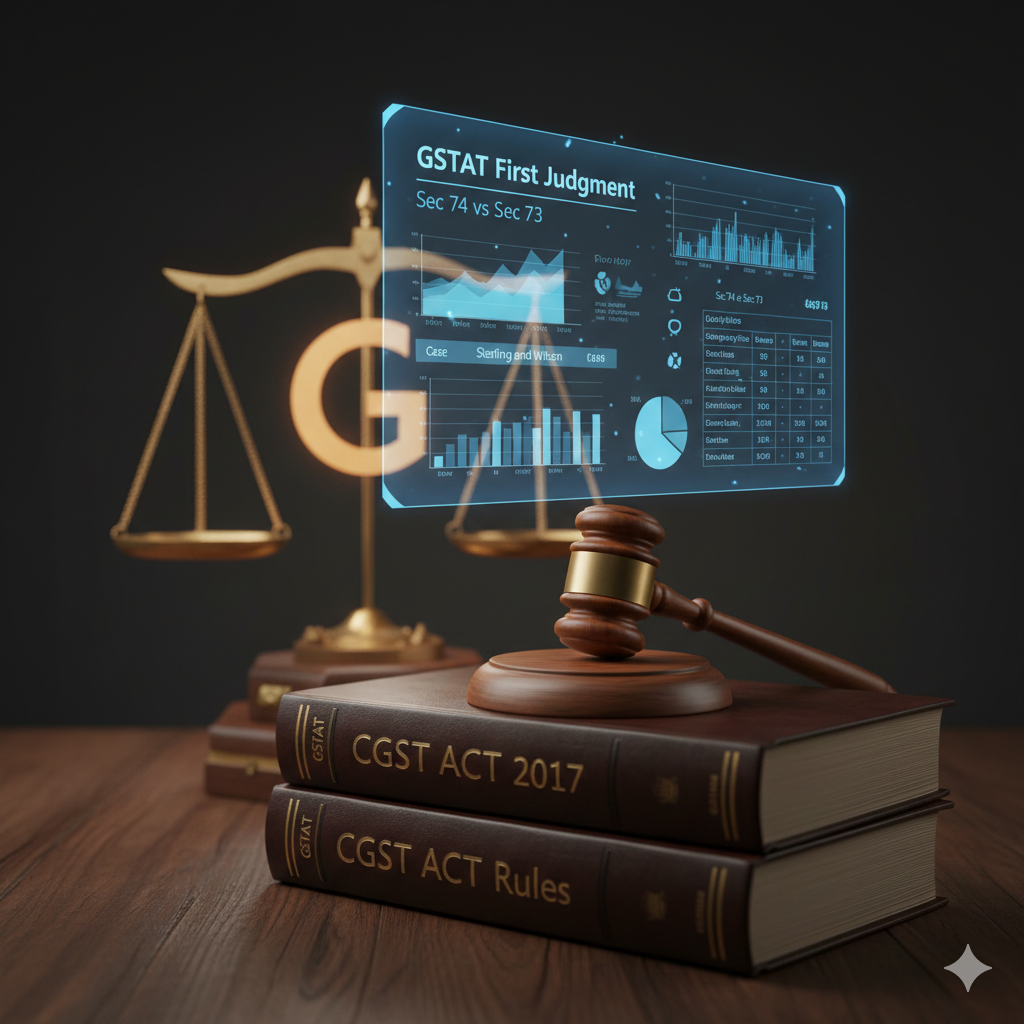
GSTAT’s Maiden Judgment: A Shield for Honest Taxpayers Against Mechanical Mismatches.
The long wait for the GST Appellate Tribunal (GSTAT) has culminated in a landmark first judgment that brings much-needed relief to the taxpayer community. In the case of M/s Sterling and Wilson Pvt. Ltd. vs. Commissioner, Odisha, the GSTAT has set a high bar for the Revenue, reinforcing that procedural mismatches do not equate to tax evasion.
The Core Conflict: GSTR-1 vs. GSTR-3B
The case arose from a common grievance: a demand for tax, interest, and penalty based on a mismatch between the output tax declared in GSTR-1 and that paid in GSTR-3B for FY 2018–19. While the First Appellate Authority admitted there was no intent to evade tax, it still upheld the demand by treating the case under Section 73 (non-fraud) instead of Section 74 (fraud).
Key Takeaways from the GSTAT Ruling
1. Tribunal as the “Last Fact-Finding Authority”
The Tribunal clarified that its jurisdiction under Section 112 is far broader than a High Court’s under Section 100 of the CPC. It is the final forum to adjudicate on questions of fact. The Revenue’s argument that the Tribunal cannot delve into factual reconciliations was categorically rejected.
2. Protection of Honest Taxpayers
In a move that resonates with the professional community, the Tribunal held that if a taxpayer has no intent to evade tax and the error is reconciliatory (due to system constraints or bona fide mistakes), they must be protected. The GSTAT noted that during the early years of GST and the COVID-19 pandemic, system limitations often prevented GSTR-1 amendments.
3. Strict Interpretation of Section 75(2)
This is the most critical technical takeaway:
- If a notice is issued under Section 74 (Fraud/Suppression) but the fraud is not proven, the proceedings must shift to Section 73.
- However, the Tribunal or the First Appellate Authority cannot re-determine the tax themselves.
- Under Section 75(2), this power rests solely with the Proper Officer. Consequently, the GSTAT remanded the matter back for a fresh determination.
Practical Implications for CAs and Businesses
This judgment serves as a vital precedent for pending litigations where “Suppression” is invoked mechanically. It grants taxpayers the liberty to:
- Seek amendment of returns/reconciliation post-adjudication.
- Demand a remand if the Appellate Authority tries to “re-calculate” tax instead of the Proper Officer.
- Argue against penalties when bona fide system constraints led to return mismatches.
Conclusion: The GSTAT has signaled a pragmatic and fair approach to GST adjudication. For businesses, this means that detailed reconciliation and transparent accounting remain the best defense against aggressive tax demands.
Need Help Navigating these Changes? At Kunal Kapoor & Associates, we help Delhi NCR businesses stay ahead of the regulatory curve.