
DGGI Investigations & GST Personal Liability for Directors.
The landscape of indirect taxation in India is shifting from mere reporting to rigorous enforcement. For many boardrooms, the Directorate General of GST Intelligence (DGGI) is no longer just a name in a circular, but a reality that brings significant GST personal liability for directors. If you are a director, CFO, or a key managerial person in an Indian company, understanding the thin line between corporate actions and personal accountability is critical to safeguarding your professional standing and personal liberty.
The Rising Role of DGGI in Corporate Investigations
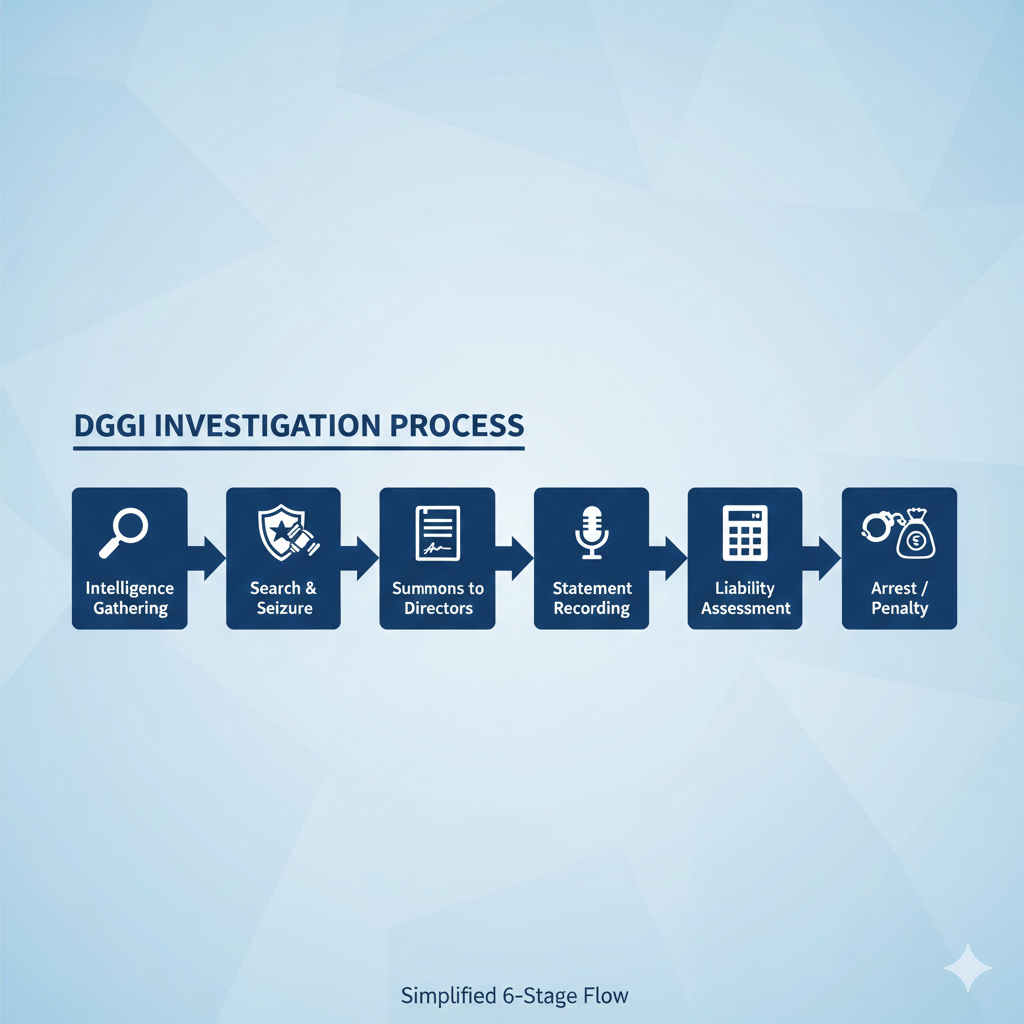
The DGGI acts as the apex intelligence organization under the Central Board of Indirect Taxes and Customs (CBIC). Their primary mandate is to detect and curb GST evasion across India. Unlike regular audit wings, the DGGI specializes in unearthing complex tax frauds, such as circular trading and fake invoicing. When the DGGI knocks on a boardroom door, they aren’t just looking at balance sheets; they are looking for the “mind and soul” behind the transactions.
Understanding Section 89 of the CGST Act
Section 89 is perhaps the most critical provision regarding GST personal liability for directors. It states that where any tax, interest, or penalty due from a private company cannot be recovered, every person who was a director during the relevant period shall be jointly and severally liable. This means your personal assets could be at risk unless you can prove that the non-recovery cannot be attributed to any gross neglect, misfeasance, or breach of duty on your part.https://www.gst.gov.in/
The Concept of ‘Vicarious Liability’
In legal terms, vicarious liability ensures that the individuals running a company cannot hide behind the “corporate veil” if intentional fraud is committed. The DGGI frequently invokes this to hold directors responsible for GST defaults. If a company fails to pay its dues, the department doesn’t just stop at the company’s bank accounts; they extend the reach to the decision-makers who authorized the non-compliant tax positions.

Arrest Risks and Punitive Measures under GST
The most daunting aspect of a DGGI investigation is the power of arrest under Section 69 of the CGST Act. While the law intends for arrest to be a last resort, it is frequently used in cases involving high-value tax evasions (typically exceeding ₹5 Crores). For a director, this means that tax disputes are no longer just financial—they are criminal. The risk is particularly high in cases involving “clandestine removals” or “availment of Input Tax Credit (ITC) without actual receipt of goods.” https://www.gst.gov.in/
Table 1: Punishment and Arrest Thresholds under CGST Act
| Amount of Tax Evaded | Bailable / Non-Bailable | Maximum Imprisonment | Arrest Risk |
|---|---|---|---|
| ₹1 Crore to ₹2 Crore | Bailable | 1 Year | Moderate |
| ₹2 Crore to ₹5 Crore | Bailable | 3 Years | High |
| Above ₹5 Crore | Non-Bailable | 5 Years | Very High |
| Repeated Offence | Non-Bailable | 5 Years | Certain |
Real-World Example: The Case of “Tech-Smart Solutions”
Consider ‘Tech-Smart Solutions Pvt Ltd,’ a fictional software firm in Bengaluru. The company was found to have claimed ITC worth ₹8 Crores based on invoices from shell companies. During the DGGI raid, it was discovered that the Managing Director, Mr. Sharma, had personally signed off on these vendor payments despite knowing no services were rendered. Consequently, Section 89 was invoked, and Mr. Sharma faced personal liability for the ₹8 Crores plus interest, along with a high risk of arrest, as the evasion exceeded the ₹5 Crore threshold.
Practical Steps to Mitigate Personal Liability
As a director, you cannot simply claim ignorance of the company’s tax affairs. You must demonstrate “due diligence.” To protect yourself from GST personal liability for directors, a proactive approach to compliance is mandatory.
- Conduct Regular Tax Health Checks: Don’t wait for a notice. Appoint independent professionals to audit your GST returns and ITC claims.
- Implement Robust Internal Controls: Ensure that every vendor is verified (GSTIN active status) before payments are released.
- Document Dissent: If you disagree with a risky tax position taken by the board, ensure your dissent is recorded in the minutes of the meeting.
- Respond Promptly to Summons: If you receive a summons under Section 70, appear personally or through an authorized representative. Evasion of summons is often seen as a sign of guilt.
- Review Indemnity Clauses: Check if your Director & Officer (D&O) insurance policy covers tax-related legal defense costs and liabilities.
Common Mistakes and Pitfalls
- Assuming that being a “Non-Executive Director” grants automatic immunity from tax liability.
- Signing GST returns or documents blindly without understanding the underlying data.
- Ignoring “SCN” (Show Cause Notices) until they escalate into a DGGI investigation.
- Retaining vendors who have a history of non-compliance or “tax-filing defaults.”
Key Takeaways
- Section 89 creates a joint and several liability for directors of private companies for unpaid GST.
- Arrest powers can be exercised by DGGI for tax evasions exceeding ₹5 Crores.
- Due Diligence is your only legal shield; you must prove the default wasn’t due to your negligence.
- Professional Guidance is essential when dealing with DGGI summons to avoid self-incrimination.
Frequently Asked Questions
Can a director be arrested even if the GST dispute is civil in nature?
Yes, if the amount of tax evasion exceeds ₹2 Crores and involves fraudulent intent like fake invoicing, the DGGI has the power to arrest, as certain tax offences are classified as cognizable and non-bailable.
Is an Independent Director also liable for GST defaults?
Generally, Independent or Non-Executive directors are not held liable unless it is proven that the omission occurred with their knowledge, consent, or connivance, or where they did not act diligently.
What happens if I don’t respond to a DGGI Summons?
Ignoring a summons issued under Section 70 of the CGST Act can lead to penalties under the Indian Penal Code (Section 174) and may give the department grounds to believe you are non-cooperative, increasing the risk of harsher actions.
Can my personal bank account be attached for company GST dues?
Under Section 83 of the CGST Act, the Commissioner can order the provisional attachment of property, including bank accounts, belonging to the “taxable person” or persons specified under Section 122(1A), which can include directors in cases of fraud.
How much penalty can be imposed on a director personally?
Apart from the tax and interest recovered under Section 89, a personal penalty under Section 122(1A) can be imposed, which can be equal to the tax amount evaded or ITC wrongly availed.
Disclaimer
This blog is intended for general informational and educational purposes only. It does not constitute professional legal, tax, or financial advice. Tax laws, GST provisions, and corporate regulations are subject to frequent amendments. The information provided is based on laws and circulars prevailing at the time of writing. Readers are strongly advised to consult a qualified Chartered Accountant or tax professional before making any financial, tax, or compliance-related decisions. CA Kunal Kapoor & Associates shall not be held responsible for any loss, liability, or consequences arising from reliance on the information contained in this blog.
Connect With CA Kunal Kapoor
Have questions about DGGI investigations or GST compliance? CA Kunal Kapoor provides professional guidance on GST litigation and corporate tax compliance for business owners, startups, HNIs, and NRIs across India. Book a consultation to discuss your specific situation and get expert advice tailored to your needs.