Can a Registered Trademark Holder Force a Company to Change its Name? An Analysis of Section 16.
In the modern corporate landscape, a brand’s identity is its most valuable asset. While many entrepreneurs focus on securing a unique name through the Registrar of Companies (ROC), they often overlook the parallel protections offered by the Trade Marks Act, 1999. A common point of legal friction arises when a company is incorporated with a name that mirrors or closely resembles an existing registered trademark.
Under the Companies Act, 2013, specifically Section 16, registered trademark holders possess significant statutory power to compel a company to rectify its name. This article provides a comprehensive educational guide on the legal framework, timelines, and compliance requirements surrounding company name change trademark infringement.
Understanding Section 16: Rectification of Name of Company
The Ministry of Corporate Affairs (MCA) ensures that no two companies have identical names. However, the ROC’s name approval process does not always guarantee that the name is free from trademark conflicts. Section 16 was designed to bridge this gap, providing a remedy to trademark owners whose intellectual property rights are compromised by a corporate registration.
Grounds for Mandatory Name Change
The Central Government (delegated to the Regional Director) can direct a company to change its name under two primary circumstances:
- Identical or Too Nearly Resembling: If the name is identical to or too closely resembles the name of an existing company.
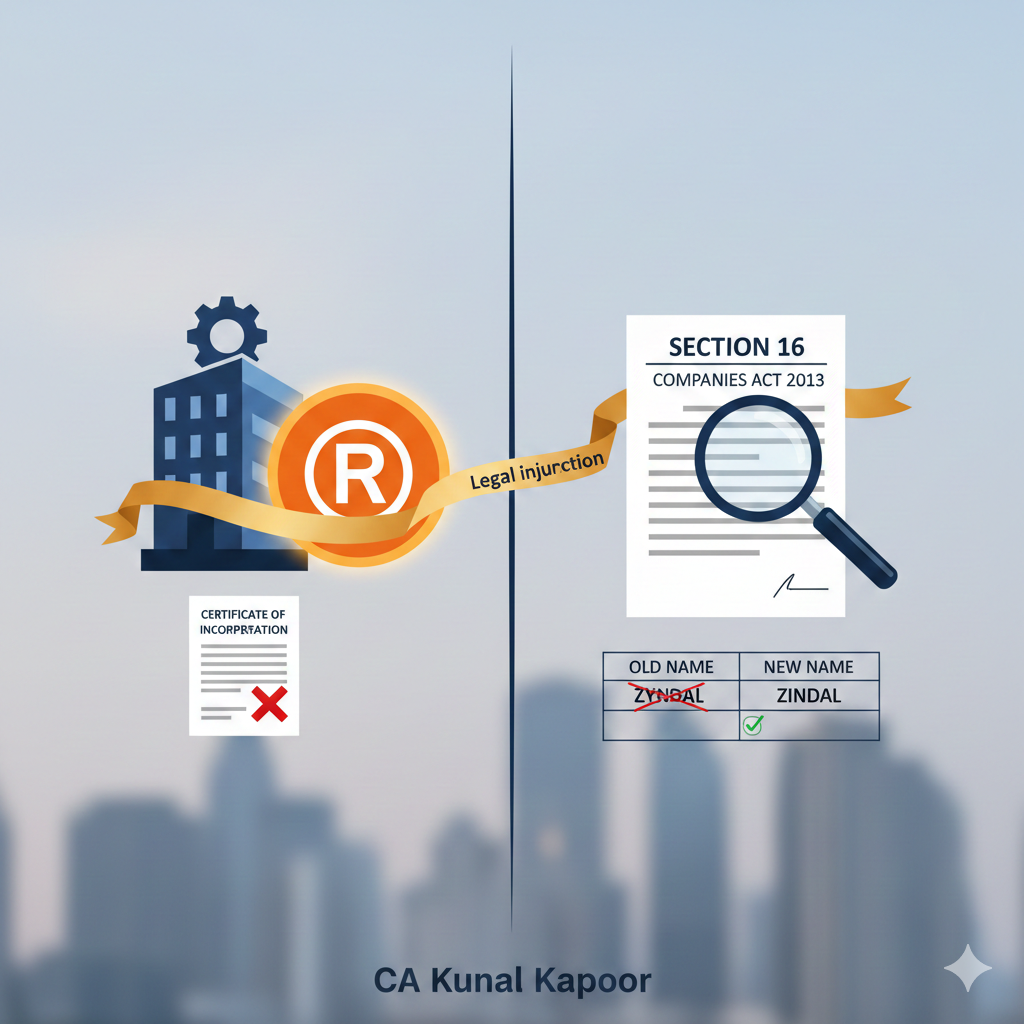
- Trademark Infringement: If a registered trademark holder finds that a company name is identical to or too nearly resembles their registered trademark.
The Three-Year Limitation Period
A crucial aspect of Section 16 is the limitation period. A registered trademark holder must file an application for the rectification of a company name within three years of the incorporation or the registration of the offending name. If the application is filed after this period, the Regional Director may not have the jurisdiction to issue a mandatory change order, and the trademark holder may have to seek remedy through a civil suit for “passing off.”
The Procedure for Rectification: Step-by-Step
If you are a trademark holder or a company facing a rectification notice, understanding the procedural flow is essential for compliance.
Application by the Trademark Holder
The aggrieved party must file an application in Form RD-1 with the Regional Director. The application must demonstrate that the company name is “identical or too nearly resembles” the registered trademark and that the trademark was registered prior to the company’s name approval.
Compliance Requirements for the Company
Once the Regional Director (RD) issues an order directing a name change:
- Timeframe: The company must change its name within three months from the date of the direction.
- Board Action: An Ordinary Resolution must be passed to effect the change.
- ROC Filing: The company must file Form INC-24 (for change of name) and Form MGT-14 (if applicable) with the Registrar of Companies.
- New Certificate: After the change is approved, the ROC will issue a new Certificate of Incorporation.
| Feature | Details |
| Relevant Section | Section 16 of the Companies Act, 2013 |
| Authority | Regional Director (RD) |
| Timeline for Application | Within 3 years of company incorporation |
| Timeline for Compliance | Within 3 months of RD Order |
| Resolution Type | Ordinary Resolution |
Example Scenarios: Trademark vs. Company Name
To better understand how these conflicts manifest, consider the following hypothetical examples:
- Example 1: Phonetic Similarity A company registers as “Zyndal Pharmaceuticals Private Limited.” However, a trademark for “Zindal” already exists in the same industry. The trademark holder can argue that the names are phonetically identical, leading to public confusion.
- Example 2: Visual Similarity A tech startup names itself “Orange Computers.” Even if the ROC approves it, the global trademark holder for “Apple” (or a local entity with a registered “Orange” trademark in electronics) could seek rectification under Section 16.
Consequences of Non-Compliance
Ignoring a direction from the Regional Director can lead to severe regulatory consequences. Under the Companies (Amendment) Act, 2020, the government introduced a mechanism for the “suo-motu” allotment of a new name.
Default Name Allotment (ORDNC)
If a company fails to change its name within the prescribed three months, the Registrar will:
- Allot a new name to the company consisting of the letters “ORDNC” (Order of Regional Director Not Complied), the year of passing the order, the serial number, and the existing CIN.
- Issue a new certificate of incorporation.
- The company is then required to use this “ORDNC” name on all its letterheads, invoices, and notices until it formally changes the name again via the standard procedure.
Frequently Asked Questions (FAQ)
Q1: Can a trademark holder object even if the company is in a different industry? Generally, trademark protection is category-specific (Classes). However, “well-known trademarks” enjoy broader protection across all classes. If the name is likely to cause confusion or dilute the brand value, an objection may still be valid.
Q2: What happens if the trademark is registered after the company is incorporated? Section 16 specifically protects trademarks that were registered prior to the company’s registration. If the company was registered first, the trademark holder may not be able to use Section 16 and would need to pursue other legal avenues.
Q3: Is an Ordinary Resolution enough to change the name under Section 16? Yes. While a standard voluntary name change usually requires a Special Resolution, a change directed by the Central Government under Section 16 requires only an Ordinary Resolution.
Q4: Can the company appeal the Regional Director’s order? Yes, a company aggrieved by the order of the Regional Director may file a writ petition in the High Court challenging the decision.
Conclusion: The Importance of Due Diligence
For entrepreneurs and directors, this highlight the necessity of conducting a comprehensive trademark search in addition to the MCA name availability check. Relying solely on the ROC’s approval can lead to costly rebranding, legal fees, and administrative hurdles later on.
As a matter of professional practice, it is recommended to align corporate names with intellectual property strategy from day one.
f you have specific questions regarding the impact of Section 16 on your business or require assistance with corporate filings, you may reach out to us.